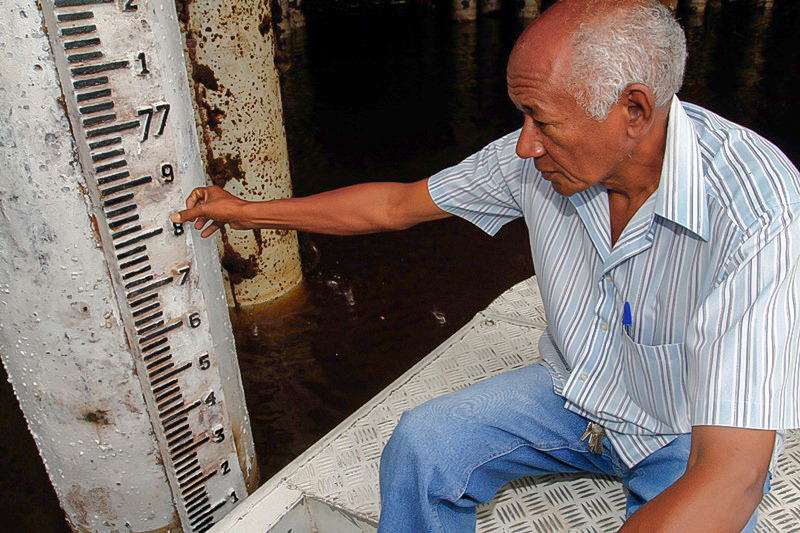
A história e vida do engenheiro civil VALDERINO PEREIRA DA SILVA, em muito se confunde com a própria história do Porto de Manaus. Apesar de alguns afirmarem que o Valderino está lá desde 15 de setembro de 1902, isso não é verdade. Nessa data, sim, foi iniciada a leitura da Cota D’água do Rio Negro, com réguas linimétricas instaladas nas antigas estacas do Porto, a quem ele deu soberba credibilidade.
Valderino, na verdade, foi admitido no Porto de Manaus no ano de 1967, sendo a sua primeira função a de encaixotar louças e cristais, em um lugar do Porto denominado ADEGA, pertencente aos ingleses, que estavam voltando ao seu país de origem, devido a nova administração do Porto estar sendo repassada ao Governo Militar da época, na chamada Revolução.
The Civil Engineer’s Story and Life VALDERINO PEREIRA DA SILVA, much is confused with the history of the Port of Manaus itself. Although some claim that Valderino has been there since September 15, 1902, that is not true. On that date, yes, the reading of the Cota D’água do Rio Negro was started, with linimetric rules installed in the old stakes of Porto, to which he gave superb credibility.
Valderino, in fact, was admitted to the Port of Manaus in 1967, being its first function to box dishes and crystals, in a place of the Port called ADEGA, belonging to the English, who were returning to their country of origin, because the new administration of Porto is being passed on to the Military Government of the time, in the so-called Revolution.
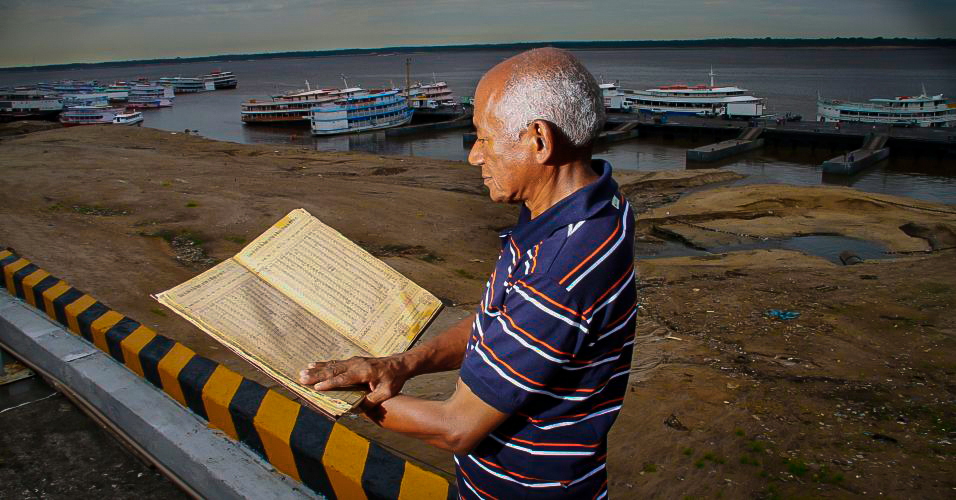
No ano de 1968 foi servir ao Exército Brasileiro, retornando ao Porto em 11 de agosto de 1969 para nunca mais se afastar de um lugar onde trabalhara, também, o seu pai Adoner Pereira da Silva. Em 1975 formou-se no Curso Técnico de Edificações, pela Escola Técnica Federal do Amazonas, sendo eu um dos seus colegas de turma, juntamente com o Antônio da Marcenaria, já falecido. Depois de formado, no ano de 1976, começou a trabalhar no SETENG, o Setor de Engenharia, onde iniciou, em substituição a José Cavalcante PAIVA, o trabalho que mantém até aos dias de hoje, que é o de fazer a leitura diária da Cota do Rio Negro. Naquele tempo era feito com a utilização de um guindaste instalado no Paredão. Os números de hoje e o local foram idéia dele. De lá pra cá já o chamaram até de “Senhor das Águas”!
Engana-se, porém, quem pensa que essa é a única atividade dele. Sendo o Porto de Manaus de características únicas e secular, a sua manutenção corretiva e preventiva é tarefa diária e pesada. São pontes metálicas de ligação entre os pátios e cais flutuantes, com seus mancais e limitação de carga a exigir um esforço contínuo; são os sistemas de ancoragem dos flutuantes, com acionamento quase diário de molinetes e amarras, conforme o Rio Negro sobe ou desce; é o cuidado permanente com as bóias cilíndricas do tempo dos ingleses que sustentam os cais; a vistoria dos pavimentos em concreto dos pátios do Paredão e Terminal de Contêineres; a avaliação e recuperação das defensas dos flutuantes; as manutenções elétricas, hidráulicas, sanitárias e de prevenção contra incêndio; entre outras tantas. Passa, então, por suas mãos e cabeça, como percebem, toda a logística que antecede e precede as operações de embarque, desembarque e movimentação de veículos, passageiros e cargas, cabendo a ele, ainda, o aprimoramento de cada tarefa, acompanhando as novas tecnologias. Muita coisa ele criou e inventou para que as instalações continuem a oferecer segurança durante 24 horas por dia, o ano todo. O Porto não pára. Ele não sossega.
Pensativo, às vezes, com a lembrança dos velhos amigos de trabalho, se surpreende ao perceber que um serviço que era trabalho de 12 ou 15 pessoas, há muito tempo ele faz sozinho. Reclama, nessas horas de solidão, a falta que uma boa conversa faz. De repente, volta à realidade e encara a idéia de que a decisão deve partir exclusivamente dele e, assim, vai e faz. Lembra, também, que se ele envelheceu com os anos, do mesmo modo o Porto tornou-se um senhor de 117 anos a exigir mais cuidados do que há 51 anos atrás, quando iniciou a trabalhar nele, ou há 42 anos, desde que fez a primeira leitura da Régua. Nos momentos de saudosismo, lembra dos antigos administradores como Sena, Fernando Vianna, Campelo, Luis Eugênio, Nelson Neto, e tantos outros colegas, como Nasser, Nenê, Rubens, Moreira, Antônio, Paiva. Tempo em que a Oficina funcionava no hoje Museu do Porto. Tempo em que ajudou na transformação da antiga sede do AGREPO, que era em madeira e que foi entregue aos portuários pelo saudoso jornalista Phelipe Daou. A sua mente passeia e visita a Vila Tocaia, também de sua responsabilidade cuidar e manter durante tantos anos. Noutro instante, se perfila entre outros colegas e trás de volta o Coral do Porto, no qual participou como tenor, sob a regência do maestro Dirson Costa. Difícil é dizer o que ele não fez nesse espaço, que se confunde com a sua casa. Como ele diz: não sei se eu pertenço ao Porto ou se é ele que me pertence, Ele tem ciúmes do seu velho companheiro. Conhece-o palmo a palmo.
In 1968 he went to serve the Brazilian Army, returning to Porto on August 11, 1969, never to leave a place where his father had also worked. Adoner Pereira da Silva. In 1975 he graduated from the Technical Course of Buildings, from the Federal Technical School of Amazonas, being I one of his classmates, along with Antonio da Marcenaria, already deceased. After graduating in 1976, he began working in the SETENG, the Engineering Sector, where he started, in place of José Cavalcante PAIVA, the work he keeps to this day, which is to do the daily reading of the Cota do Rio Negro. At that time it was done with the use of a crane installed in the Wall. Today’s numbers and the location were his idea. From there to here, they even called him Lord of the Waters!
But you’re wrong who thinks this is his only activity. Being the Port of Manaus of unique and secular characteristics, its corrective and preventive maintenance is daily and heavy task. They are metal bridges connecting between the courtyards and floating piers, with their bearings and load limitation requiring continuous effort; they are the anchoring systems of the floaters, with almost daily drive of molines and molines, as the Rio Negro rises or descends; it is the permanent care with the cylindrical buoys of the time of the English who sustain the piers; the inspection of concrete pavements of the Paredão and Terminal de Contêineres courtyards; the evaluation and recovery of the defenses of the floaters; the electrical, hydraulic, sanitary and fire prevention maintenances; among many others. It then passes through his hands and head, as they realize, all the logistics that precedes and precedes the operations of boarding, disembarking and moving vehicles, passengers and loads, and it is up to him to improve each task, following the new technologies. A lot of things he’s created and invented to keep the facility safe for 24 hours a day all year. Port won’t stop. He won’t settle down.
Thoughtful, sometimes, with the memory of his old friends at work, he is surprised to realize that a service that was a work of 12 or 15 people, for a long time he does alone. He complains, in these lonely hours, the lack of good conversation. Suddenly, he comes back to reality and faces the idea that the decision must come from him exclusively and thus goes and does. Remember, too, that if he has aged over the years, likewise Porto has become a 117-year-old man demanding more care than 51 years ago, when he started working on it, or 42 years ago, since he made the first reading of the Regua. In moments of nostalgia, remembers the former administrators as Sena, Fernando Vianna, Campelo, Luis Eugênio, Nelson NetoAnd so many other colleagues, such as Nasser, Nene, Rubens, Moreira, Antonio, Paiva. The time when the Workshop worked at the Porto Museum today. A time when he helped transform the former headquarters of AGREEMENT, which was in wood and was handed over to the porters by the late journalist Phelipe Daou. His mind walks and visits the Vila Tocaia, also your responsibility to care and maintain for so many years. In another moment, there is a profile among other colleagues and back the Coral of Porto, in which participated as tenor, under the rule of conductor Dirson Costa. It’s hard to say what he didn’t do in this space, which is confused with his home. As he says: I do not know if I belong to Porto or if it belongs to me, He is jealous of his old companion. You know him long enough.
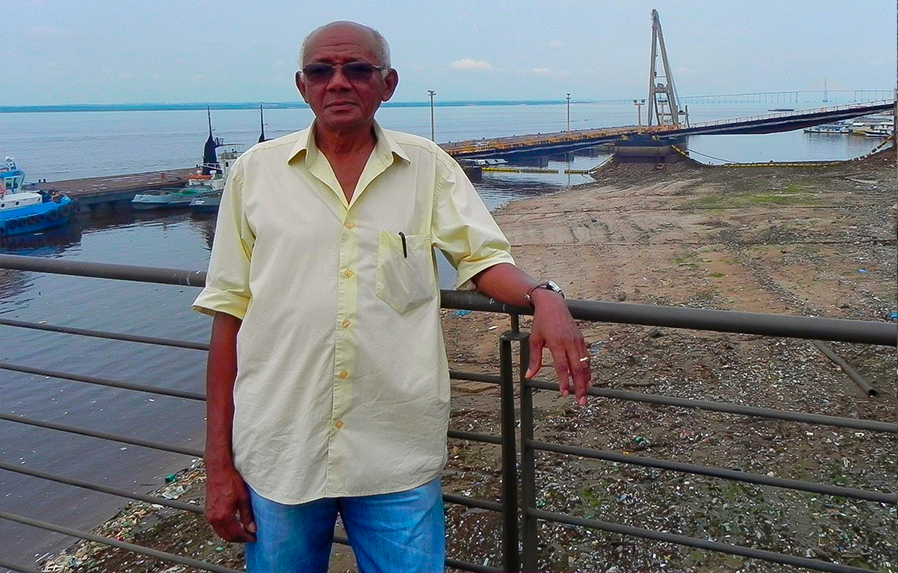
Único trabalho em toda a vida. Trabalho no qual sustentou sua família composta da Pedagoga Vanda Maria Batista da Silva, sua companheira de quase 50 anos. Dos filhos Vanderlei, Valderino Filho e Vanderlan, engenheiros, matemáticos, professor universitário da UFAM, com mestrado e doutorado, que tiveram o prazer de ter em suas salas de aula, também na UFAM, o próprio pai, a causar sadias confusões entre os professores e colegas. É bom que se diga que Valderino é Engenheiro Civil, formado em 1998. Cuida, ainda, e com enorme carinho e bondade dos netos Letícia, Vinícius, Jorge Miguel e Gabriel, nos quais tenta com sucesso imprimir o gosto pela vida e pela arte com aprumada responsabilidade, herdados de sua mãe Raimunda Nonata da Silva.
Finalmente, não existe somente o pai, marido, avô e amigo. Nem só de trabalho Valderino pautou a sua bem vivida história. Houve tempo para cantar e tocar instrumentos de samba. Houve tempo para curtir a família e os amigos. Atualmente, com quase 70 anos de idade, se aventura a aprender teclado, e o faz com retumbante interesse. Temos conversado a respeito. Agora, emoção de verdade é quando toca o Hino Nacional, que ele gosta de cantar. E como gosta. Peito estufado, corpo ereto e coração alinhado com a orquestra. Pulmões soltos e voz embargada.
No mais, ainda é o primeiro a chegar ao Porto, antes das 7 horas da manhã, num percurso de sua segunda casa, no Bairro de São Lázaro. Ele sempre acha que a primeira casa é o Porto. Recentemente me falou da sua distância dos holofotes da mídia, apesar de muito conhecido e reconhecido na cidade, como também bastante requisitado pela imprensa. Não quer virar livro nem escrever sua história. Faço esse resumo porque sou teimoso e seu amigo. Passando pelas ruas do centro, as pessoas o cumprimentam respeitosamente e até lhe pedem autógrafo. Ele disfarça, ri e sai de fininho. Até um artista-estátua, reconhecendo-o quando passava, perguntou entre sorrisos sobre a enchente. Quando em cerimônia como esta de hoje, na Assembléia Legislativa, onde recebeu a medalha Ruy Araújo, o seu neto Gabriel, então com 3 anos, disparou alto e bom som: “VALEU, VÔ!!! Eu me uno ao Gabriel neste momento e repito com orgulho e emoção: “VALEU, VALDERINO”.
Only job in life. Work in which he supported his compound family of the Pedagogue Vanda Maria Batista da Silva, his companion of almost 50 years. Children’s Vanderlei, Valderino Filho and Vanderlan, engineers, mathematicians, university professor of UFAM, with master’s degree and doctorate, who had the pleasure of having in their classrooms, also at UFAM, their own father, causing healthy confusion between teachers and colleagues. It is good to say that Valderino is a Civil Engineer, graduated in 1998. Care, yet, and with great affection and kindness of grandchildren Leticia, Vinicius, Jorge Miguel and Gabriel, in which he successfully tries to impress his taste for life and art with a thorough responsibility, inherited from his mother Raimunda Nonata da Silva.
Finally, there is not only the father, husband, grandfather and friend. Not just work. Valderino guided his well lived history. There was time to sing and play samba instruments. There was time to enjoy family and friends. Currently, at almost 70 years of age, he ventures to learn keyboard, and does so with resounding interest. We’ve been talking about it. Now, real emotion is when he plays the National Anthem, which he likes to sing. And how you like it. Boiled chest, erect body and heart aligned with the orchestra. Lungs loose and voice jammed.
In addition, he is still the first to arrive in Porto, before 7 a.m. on a journey from his second home, in the neighborhood of São Lazaro. He always thinks the first house is Port. Recently he told me of his distance from the spotlight of the media, although well known and recognized in the city, as well as quite requested by the press. You don’t want to become a book or write your story. I do that summary because I’m stubborn and your friend. Passing through the downtown streets, people greet him respectfully and even ask for his autograph. He disguises, laughs and sneaks out. Even a statue artist, recognizing him as he passed by, asked between smiles about the flood. When at a ceremony like this one today, at the Legislative Assembly, where he received the Ruy Araújo medal, his grandson Gabriel, then at the age of three, fired loud and clear: “VALEU, VALEU!! I join Gabriel at this moment and repeat with pride and emotion: “VALEU, VALDERINE”