

With the economic development produced by rubber, it became necessary to expand the existing port facilities, which were summarized in the building of Recedoria (present-day Operation building), and the trapiche "15 November", built in 1890.
On October 13, 1869, D. Pedro II sanctioned the Law of no. 1,746, which authorized the presidents of the provinces to control the construction in the different ports of the Empire of docks and warehouses for loading and unloading of goods. Thirty years later, September 5, 1899. The Federal Government published competition notice for execution of improvements works of Manaus Port.

The deadline for the submission of tenders was extended until April 1900. The winner of the competition was the São Paulo firm B. Rymkiewcz & Co, which signed the contract on August 25, 1900. The contract established a period of 60 years from the date of inauguration of the works for the operation of Porto. The firm had obligations:
Regularize the riverbank, build a dock, access ramp, permanent and floating works for the docking of any ship at any time of the year, and loading, unloading and storage services with respect to small and large navigation.
Since the period in which the result of the competition was known until 1902, the firm B. Rymkiewcz & Co, barely complied with the clauses of the contract signed with the Federal Government. It's called the Port Improvement Company. the same firm signed the contract with the state government to build and exploit, without prejudice to the execution of the contract with the federal government, a provisional part with vast warehouses and spacious accommodations for cargo, besides transferring to its charge the state trapiche " 15 November " and their bridge. In 1902, B. Rymkiewcz and the Port Enhancement Company transferred their contracts to the English company "Manaos Harbour Limited".
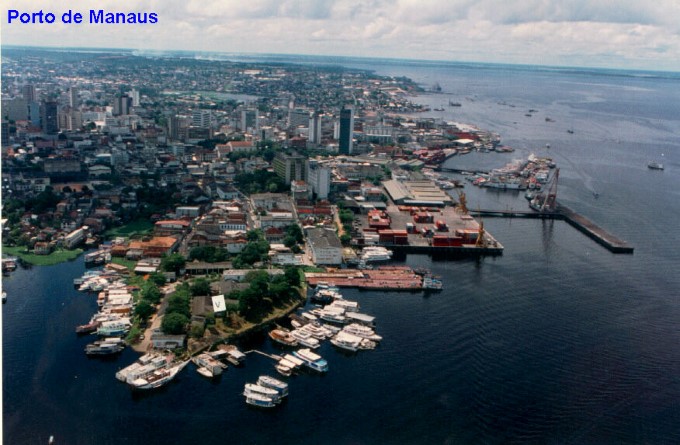
Officially the improvement works of Manaus Port began on October 7, 1902, in solemnity that counted with the presence of the state governor Dr. Silvério Nery.
The works were carried out in stages:
– In 1903, the House of Machines (now the headquarters of the Museum of Porto) was built, warehouse number 7 and temporary pier.
– In 1904, warehouses No. 9 and 10 were built, the metal tower for the water box, the railway lines for the services of the warehouses of Porto, the Roadway pier and installations of the first electricity generators.
– In 1905, areas around warehouses 9 and 10 were paved.
A small risk wall was built at the base of the same warehouses and an inclined plane in front of warehouse number 7.
– In 1906, the Customs and Guardamoria building was erected, the second stretch of the masonry pier, the extension of the wooden platform, the warehouse number 0 and the floating bridge of the Roadway.
– In 1907, the General Office building and the sewer galleries.
The works dragged on for long years, being completed around 1919.
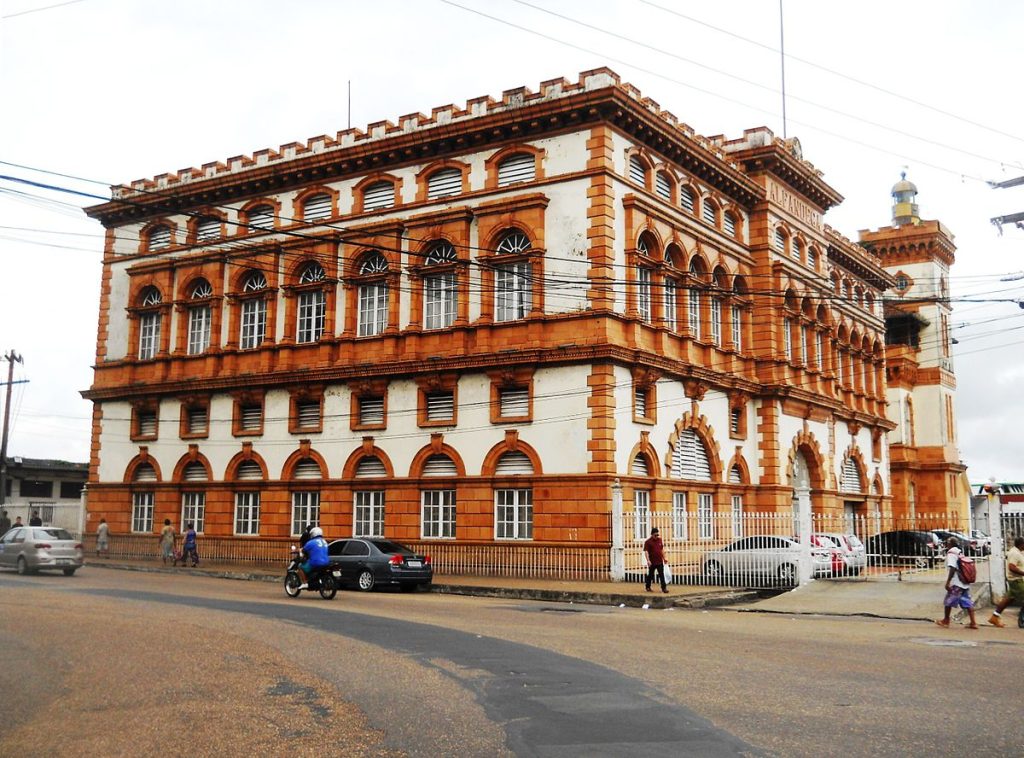
One of the clauses of the contract signed between the Federal Government and the firm winning the competition for the construction of Porto, stipulated as "obligatory to the construction and donation of the building necessary and appropriate for the administration of Customs".
The plan and budget, carried out by architect Edmund Fisher, were ready in 1903, but only in 1906. The building was built.
Attaches Customs is Guardamoria, built in the same period and with the same architectural style, intended for fiscal policing in ports and on board ships. This building has a steel-built lighthouse tower and, at the time, its voltaic arc lighting produced a light of great intensity.
Building designed to function as general office of the company on the lower floor and residence of directors on the upper floor.
The building was designed by the architects H.M. Fletcher and G. Pinkerton. The construction was completed in 1907.
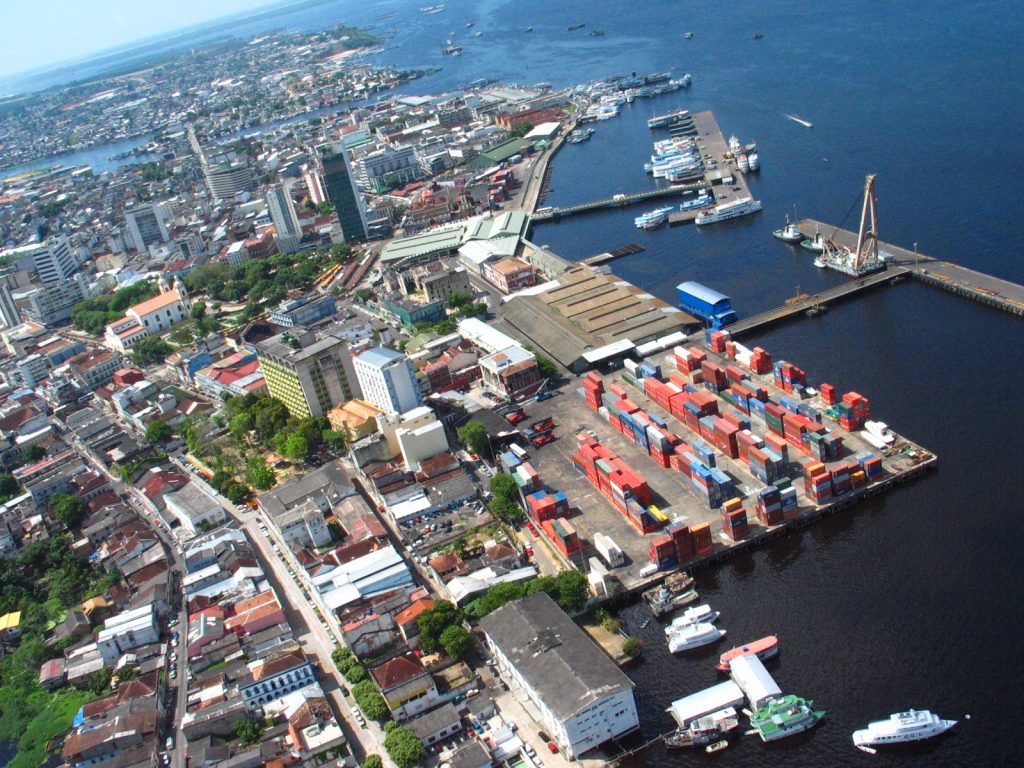
The Federal Government opened competition for execution of improvements works of Manaus Port on September 05, 1899, 30 years after sanctioned the Law no 1746 of October 13, 1869 by Emperor D. Pedro II, which authorized the presidents of the Provinces to hire the construction in the different Ports of the Empire, docks and warehouses for loading and unloading of goods.
In the middle of 1890, the State Government opened its trapiche "15 November", a complex that covered the building of Recedoria (present-day Operation sector), with ramp and direct exit to the trapiche. By these state port facilities the goods were shipped at the time.
The contract signed with the firm B. Rymkiewecz & Co, winner of the competition with the Federal Government, where it required the following services: construction of the pier and access ramp, regularization of the river bank, dredging and construction of floats for the docking of any ship at any time of the year.
As there were already in place the precarious state facilities that operated the loading and unloading services, the firm signed another contract with the State Government (the firm signing the contract was "Oporto Enhancement Company", but the owners were the same), to perform the following services: to build and put into operation before the leak of the river a provisional bridge with vast warehouses, that is, without prejudice to the execution of the concession of the Federal Government. The company would still be in charge of "exploring and expanding the Trapiche 15 November and street bridge with the right to charge all fees, in addition to signing later agreement to have exclusive rubber movement by said trapiche".
In 1902 the two contracts were passed on to the firm Manaos Harbour Limited, a firm established in London that besides the Booths family had as partner B. Rymkiewecz & Lavandery.
This problem of the existence of two contracts where the services were practically the same, what is perceived is that the company was the same, but with different names and received boarding and landing fees that were carried out in the state trapiche and grant of the Federal Government for the constructions.
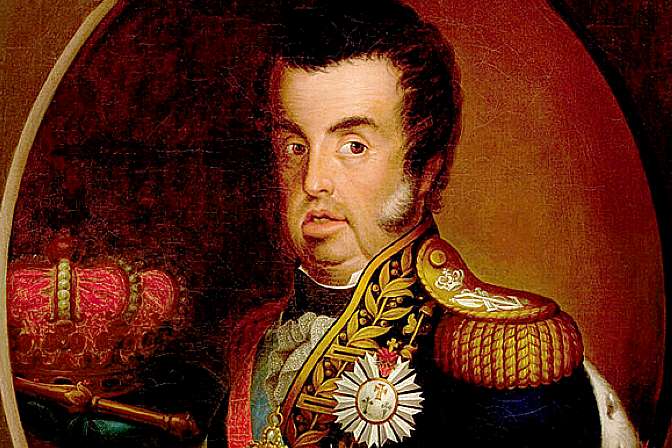
The Anglo-Portuguese Convention of 22 October 1807 decided to transfer the Portuguese Court to Brazil and established that, given the prohibition of English ships frequenting Portuguese ports, closed by the Continental Block, "it would require the Portuguese government to open to them a port on the island of Santa Catarina, or at any other point on the Brazilian coast, by which they would be imported into British ships, Portuguese and English goods, paying the same rights then in force in Portugal, during this agreement until further adjustment", as the historian Hélio Vianna teaches.
In fact, the "friend nations" were basically restricted to England, because the rest of Europe was blocked by the British fleet and the United States still did not make significant commercial competition. As the Portuguese lands themselves were occupied by French and Spanish, some historians consider the agreement to be the replacement of the Portuguese monopoly for English in Brazilian ports. It would still last several years, due to the various treaties signed between the two countries until the Independence of Brazil.
The Royal Letter of January 28, 1808 is considered by Hélio Vianna as "the basis of our economic and, consequently, political autonomy", as it allowed the commercial increase of Brazilian products directly with the foreigner and, therefore, the development of the then headquarters of the Portuguese kingdom. The letter was sent by Prince Regent D. João VI to the Count of Ponte, governor of Bahia and who had commented with the prince, when he arrived, of the inconveniences of the suspension of maritime trade.
Count of the Bridge, my Council, Governor and Captain General of the Captaincy of Bahia Amigo. I, the Prince-Regent, send you a great greeting, like the one I love.
In view of the representation you have brought to my Real presence, about the interruption and suspension of the trade of this Captaincy, with grave prejudice to my vassals and my Royal Farm, due to the criticism and public circumstances of Europe; and wanting to give on this important object some prompt and capable providence to improve the progress of such damages: I am served to order interim and provisional, until a general scheme, which effectively regulates similar matters, is established:
Primo; that are admissible in the Customs of Brazil, any genres, farms and goods, transported or in foreign ships that are preserved in peace and harmony with my Royal Crown, or in ships of my vassals, paying by entry 24 percent, namely, 20 gross rights and four of the donation already established, regulating the collection of these rights by the tariffs or outages, because until now each of the so-called Customs is regulated, with the wines, burning waters and sweet olive oils, which are called wet, paying twice the rights that so far satisfied them.
Second: that not only my vassals, but also the overt foreigners, can export to the ports that it seems to them, the benefit of trade and agriculture, which I so desire to promote, all and all colonial genres, except for the country of Brazil and others notoriously staunch, paying for their departure the same rights already established in the respective captaincies, being, however, suspended and without vigour all laws, letters-regies or other orders, that even here prohibit the reciprocal trade and navigation between my vasssals and foreigners.
What all of this will you do with the zeal and activity I expect from you. Written in Bahia, January 28, 1808. Prince.
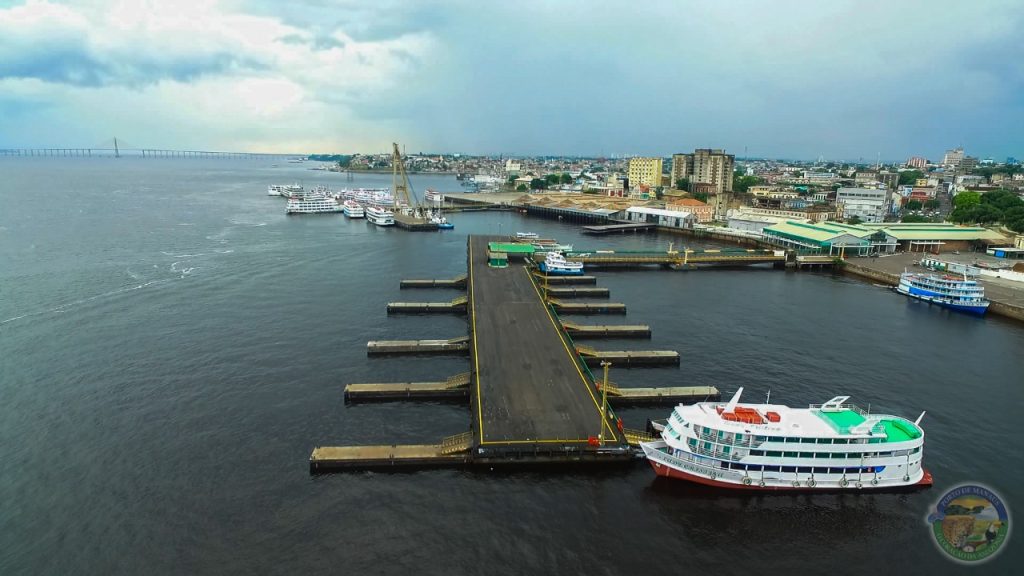
"The Passenger Boarding and Landing Service is excellent. The vapors of any silence dock to the great floating caes, where passengers land with their luggage, following the bridge called Roadway, which gives access to the masonry caes. This bridge is an admirable work, built on a row of watertight fluctuating cylinders, divided into sections bound by high-strength steel hinges. The ground side is connected to the surface of the masonry caes and the other end to the fluctuating caes where large warehouses are assembled, so that the Roadway bridge accompanies by the river side the increase or decrease of the waters, in the large floods lies the bridge almost at the level of the masonry caes, while in the large flows of the river, it becomes a perfect tilted plane. By the center of the bridge is made the rapid service of loading and unloading the goods conducted by the steams of large and small cabotage".
"A large number of wagonetes receive the volumes on the platform of the floating caes, the quaes following the railway line, enter the line running through the center of the bridge, climb and descend in rows, powered by electric energy and thus penetrate into the warehouses of earth distributors, where they are unloaded to be delivered to their owners."
From the report of Eng. Olympio Leite, to the Historical and Ethnographic Dictionary of Brazil for the Centenary of Independence.
In 1978 the bridge was hit by the ship HELENA, which broke in half being replaced.

